Instatement of ownership title, Prohibitions to alienate in Romania

    5 reasons why you can become an Add-Energy Renewable Romania PARTNER     —– click the link  —– To register your Company as ADD ENERGY PARTNER , please access   For other informations click to

Biomass in Romania

    5 reasons why you can become an Add-Energy Renewable Romania PARTNER     —– click the link  —– To register your Company as ADD ENERGY PARTNER , please access   For other informations click to

VAT issuesfor the development of a wind park

    5 reasons why you can become an Add-Energy Renewable Romania PARTNER     —– click the link  —– To register your Company as ADD ENERGY PARTNER , please access   For other informations click to

Other Renewable Energy sources

  5 reasons why you can become an Add-Energy Renewable Romania PARTNER     —– click the link  —– To register your Company as ADD ENERGY PARTNER , please access   For other informations click to

New Add Energy Publications

Green Certificates Market ——  Section in continuous improvement ——- – Registration to C.V. Market              ;   – O.P.C.O.M. Presentation – The 2011 O.P.C.O.M. Report on the electricity Market operator in Romania   – Retrieval, Validation and C.V. Processing ;  – Settlement tranzaction on O.P.C.O.M. C.V. – Daily trading session on green certificates  … Read more

Technologies of biomass energy production


They can now be used to produce fuels, chemicals and power.


Wood has been used to provide heat for thousands of years. This flexibility has led to increased use of biomass based technologies.


Biomass technologies use organic materia to release stored energy from the sun. The process used depends on the type of biomass and end-use destination.

Biofuels  BIO FUELS

Bio power  BIO POWER

Bio products  BIO PRODUCTS

Bio resources  BIOMASS RESOURCES

         —– chick the links  —–


   100 % RENEWABLE BIOMASS / BIOENERGY NEWS


Harta Interactiva a proiectelor de Energie Regenerabila din Romania

The interactive map for Renewable energy projects in Romania


A biogas plant :

Cost per KW installed: 3000 euros

Capacity factor: 60% (50-70%)

Annual production: 5.2 MWh

Green certificates / MWh: 2.7

Price without subsidy: 260 euro / year, so a return of 11.5% and payback in 8.7 years.

Minimum proceeds: 580 euro / year, so a return of 19.3% and payback in 5.2 years.

Maximum proceeds: 900 euro / year, so a return of 30% and payback in 3.3 years.


IMPACT  Sustainable Bioenergy        IMPACT:  Sustainable Bioenergy

        Ensurly sustainable biomass in a rapidly developing market

        Towards a biobased economy in Europe

        Understanding impacts from biofuels


Harta proiectelor de producere a anergiei electrice cu centrale pe biomasa

The map projects that produce electricity with Biomass plants

—– source Fabrica de cercetare —–


Measuring the Potential of Switchgrass Pellets.   Measuring the Potential of Switchgrass Pellets.

President Barack Obama wants U.S. scientists to pursue an "all-of-the-above" strategy in developing new sources of domestic energy.Agricultural Research Service agronomist Paul Adler is providing complete cost-benefit breakdowns for using switchgrass pellets instead of fuel oil to heat homes and businesses in the Northeast.

    English version — ;  Versiunea in limba romana


                             Acces the informations about Biomass Energy potential in Romania


AEBIOM - EUROPEAN BIOMASS  ASSOCIATION   AEBIOM – EUROPEAN BIOMASS  ASSOCIATION


ADD Energy Renewable Romania Youtube Video Canal

Playlist Technologies for obtaining Energy from Biomass


5 reasons why you can become an Add-Energy Renewable Romania PARTNER


To register your Company as ADD ENERGY PARTNER , please access   register_now_2

For other informations click to Contact-Us

Measuring the Potential of Switchgrass Pellets

  “There have been a lot of studies on bioenergy potential,” says Adler, who works at the ARS Pasture Systems and Watershed Management Research Unit in University Park, Pennsylvania. “Most of them are focusing on transportation, but we still need a viable, commercial, biobased fuel substitute for petroleum. In the meantime, our studies suggest that we already have opportunities to use homegrown feedstocks for producing heat, and that we can save money, reduce petroleum use, and cut greenhouse gas production in the process.”

   Adler and others conducted a life-cycle assessment comparing costs of energy generation from coal, natural gas, fuel oil, and switchgrass in the form of energy-dense cubes, briquettes, and pellets. His research partners included ARS technician Fred McNeal, Pennsylvania State University graduate student Tom Wilson, Wilson’s advisor David Abler, and Drexel University assistant professor Sabrina Spatari.

   The researchers calculated the economic outlays associated with switchgrass production throughout the supply chain and the amounts of greenhouse gases—carbon dioxide, nitrous oxide, and methane—emitted during switchgrass production, densification, and conversion to heat and power. This included the first life-cycle inventory of switchgrass seed production and the greenhouse gas emissions associated with it, which the team developed using real-world information from a Pennsylvania producer.

   The analysis indicated that 192 pounds of “carbon dioxide equivalent,” or CO2e, were emitted for every ton of switchgrass dry matter that was grown, harvested, and delivered to densification plants for processing into pellets. CO2e is a measurement used to compare the emissions from various greenhouse gases based on their global-warming potential.

   More than 54 percent of these emissions were from nitrous oxide resulting from nitrogen fertilizer application, while farm equipment operation also produced substantial levels of greenhouse gases. Processing each ton of dry matter into pellets generated another 287 pounds of CO2e; 78 percent of these emissions stemmed from grinding and pelletizing processes, with the remainder coming from the drum dryer.

   The analysis indicated that 192 pounds of “carbon dioxide equivalent,” or CO2e, were emitted for every ton of switchgrass dry matter that was grown, harvested, and delivered to densification plants for processing into pellets. CO2e is a measurement used to compare the emissions from various greenhouse gases based on their global-warming potential.

   More than 54 percent of these emissions were from nitrous oxide resulting from nitrogen fertilizer application, while farm equipment operation also produced substantial levels of greenhouse gases. Processing each ton of dry matter into pellets generated another 287 pounds of CO2e; 78 percent of these emissions stemmed from grinding and pelletizing processes, with the remainder coming from the drum dryer.

Masurarea potentialului peletelor din iarba prelucrata 01

   According to the team’s calculations, heating with switchgrass pellets would continue to be less expensive even if switchgrass production costs rose 200 percent and the price of fuel oil dropped 70 percent. These findings are based on the average heating-oil price from the 2010-2011 heating season, which was $0.90 per liter. But even if fuel-oil prices dropped to their 10-year average of $0.62, it would still cost less to generate a gigajoule of heat using switchgrass pellets.

   Coal is a somewhat different story. Although substituting biomass for coal in electric generation substantially reduced greenhouse gas emissions, it would come at a high cost to domestic consumers. Using coal, it would cost $31.03 to generate each megawatt of electricity, but using switchgrass briquettes would cost $154.62, and switchgrass cubes would cost $156.52. (Briquettes and cubes were used in this series of life-cycle analyses because of their lower energy intensity relative to pellets.) So even though greenhouse gas emissions would drop dramatically by using switchgrass to generate power, these reductions are achieved at a high cost relative to coal—an outcome called “positive abatement costs” that policymakers would like to avoid.

  Using projections from the U.S. Department of Energy’s “Billion Ton Report,” the scientists concluded that by 2022 there would be enough sustainably harvested biomass available in the northeastern United States to offset the entire regional demand for heating oil. This would save consumers between $2.3 and $3.9 billion per year in fuel costs.

   It would also reduce greenhouse gas emissions in the Northeast — currently around 885 million tons of CO2e every year — by 5 percent. Many renewable-fuel projects are tasked with finding cost-effective strategies for generating electricity with biomass instead of coal, but replacing fuel oil with switchgrass pellets in home heating systems could become just as beneficial.

Masurarea potentialului peletelor din iarba prelucrata 02

    Van Vugt, who also started a company called “Pequest Energy” with the goal of using locally grown and sustainable sources of biofuel for energy production, already burns pellets made from locally grown warm-season grasses to heat some of his greenhouses.

   The scientists have published their results in Environmental Science & Technology. Wilson, who conducted the work as part of his master’s program, was the lead author. Adler notes that this research—which is the first published life-cycle analysis of the costs and benefits of using switchgrass-derived fuel for U.S. thermal generation—demonstrates that the energy contained in switchgrass pellets compares favorably with that contained in petroleum-based fuels.

   “We can use a ton of pellets made from dried switchgrass to replace 116 gallons of fuel oil that contains 17.2 megajoules of energy. Or we can use a ton of switchgrass pellets to replace 50 gallons of gasoline that contains 6.2 megajoules of energy. So using biomass to replace fuel oil displaces more than twice as much petroleum as using biomass to replace gasoline,” says Adler. “If we use the switchgrass to replace fuel oil instead of the coal used to generate electricity, we also substantially reduce greenhouse gas emissions at a much lower cost to consumers—and help meet our long-term goals for domestic energy production from alternative fuels.”

Masurarea potentialului peletelor din iarba prelucrata 03

     —– source    renewableenergyworld.com  —–


5 reasons why you can become an Add-Energy Renewable Romania PARTNER

To register your Company as ADD ENERGY PARTNER , please access   register_now_2

For other informations click to Contact-Us


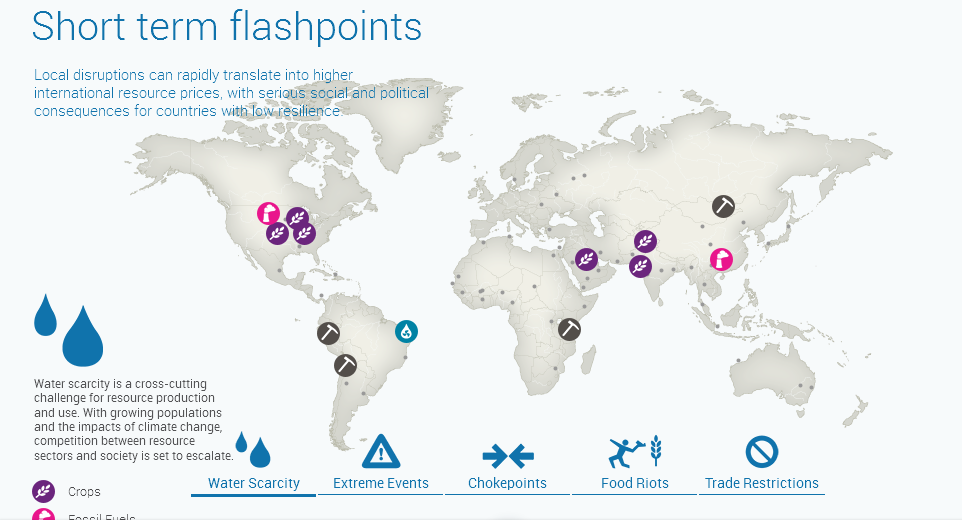
Resources futures – The new political Economy of resources

Growth and changing lifestyles in the emerging economies mean that demand for meat is likely to increase by a further 20% this decade. We now consume about 17kg of fish per capita each year.

China, India and Brazil account for about 30% of global timber consumption. Worldwide, wood pellet demand increased 400% in the past decade, for use as a fuel.

In 2006, non-OECD outstripped OECD in fossil energy demand. Since 2010, China accounted for 83% of global demand growth coal and 50% of petroleum.

Metals markets have reconfigured around China. It now consumes nearly half of global demand for steel, mostly for infrastructure and construction and for manufacturing.

NEW  INTERDEPENDENCIES

Emerging economies like India and China are now the most important customers for oilseed exporters such as Malaysia and Indonesia (palm oil) or Brazil and Argentina (soybeans). 2000

Emerging economies like India and China are now the most important customers for oilseed exporters such as Malaysia and Indonesia (palm oil) or Brazil and Argentina (soybeans).2010

Resources futures 01

Resources futures 02

Resources futures 03

Resources futures 04

Resources futures 05

Resources futures 06

Resources futures 07


5 reasons why you can become an Add-Energy Renewable Romania PARTNER

To register your Company as ADD ENERGY PARTNER , please access   register_now_2

For other informations click to Contact-Us


Wind in numbers / Numerical equivalents of wind

5,500

The number of average EU households that one 6 MW offshore turbine can power.

8,000

The number of parts a wind turbine has.

59.6%

On 6 November, 2011 at 2 am, 59.6% of Spain’s total power demand was supplied by wind power.

55%

Of all the electricity used by South Australians on 5 September 2012 was generated by wind power.

16%

The average amount of electricity demand met by wind in Spain.

39.4%

The annual growth of Chinese wind market in 2011.

26%

The average amount of electricity demand supplied by wind in Denmark. The Danish government aims to get 50% of its electricity from wind by 2025.

199,064

The number of wind turbines spinning around the world at the end of 2011.

45,894

The amount of wind turbines up and running in China at the end of 2011.

3

It takes a wind turbine 3-6 months to recoup the energy that goes into producing, operating and recycling the wind turbine after its 20 to 25 year lifetime.

1$

The amount of subsidies given to all renewable energy technologies, versus the $USD 6-7 in subsidies given to fossil fuels (see the International Energy Agency’s 2011 World Energy Outlook).

41

The number of GW of wind power installed in 2011, bringing the total installed global capacity to more than 238 GW at the end of 2011.

23,640

The number of new wind turbines erected across the world in 2011.

15

Wind turbine blades rotate between 15 and 20 times per minute.

2.5%

The percentage of global electricity supplied by wind power.

8-12%

The amount of global electricity that could be supplied by wind power in 2020.

10,000

A farmer from Iowa who uses one tenth of a hectare for a wind turbine could earn about $USD 10,000 per year, compared to about $USD 300 using the same area to grow corn for ethanol.

7.5

The most powerful wind turbine is a 7.5 MW turbine with a rotor diameter of 126 meters.

6

The largest offshore turbines are just over 6 MW with a rotor diameter of 126 metres – longer than a football field.

150

The  largest turbine in the world is the new Alstom Haliade 6 MW turbine with a rotor diameter of 150.8 meters.

102

The amount of megawatts in the first large commercial offshore project outside of Europe – the Shanghai Donghai Bridge offshore project.

89%

The number of EU citizens who are in favour of wind power, according to a 2011 poll.

2

A 10 MW wind farm can easily be built in two months. A larger 50 MW wind farm can be built in six months.

240,000

The number of people employed by the wind industry in the EU in 2011. This is a 30% increase from 2007 to 2010, despite EU unemployment which rose by 9.6%.

520,000

The amount of people expected to be employed by the wind power sector in 2020 in the EU. By 2030, the figure will be 794,079, with 62 % of jobs in the offshore sector.

670,000

The number of people employed worldwide by the wind industry in 2011.

583

The number of megawatts of wind power installed in Brazil in 2011 – Brazil has become a leader in the South American wind energy market, increasing its capacity over 90% from 2010 to a total of more than 1500 MW.

7

The number of wind bases in China aiming at reaching at least 10 GW: Inner Mongolia East, Inner Mongolia West, HeBei, Jiangsu, Jilin, Ganxu, XinJiang.

446,000,000,000

  The number of kilowatt hours of wind energy produced worldwide in 2011.

84

In 2010, the 84 GW of wind power in the EU avoided the emission of 126 million tonnes (Mt) of CO₂, equivalent to taking 30% of EU cars (64 million vehicles) off the road.

17

Wind power farms generate between 17 and 39 times as much power as they consume, compared to 16 times for nuclear plants and 11 times for coal plants.

5,700,000,000

The EU exported 5.7 billion Euro worth of wind industry products and services in 2011


5 reasons why you can become an Add-Energy Renewable Romania PARTNER

To register your Company as ADD ENERGY PARTNER , please access   register_now_2

For other informations click to Contact-Us


[:]

Read more

Wind in 2012: Booming in North America, also Tops 100 GW in Europe

   The third quarter of 2012 saw 1.8 GW of wind power capacity installed in the U.S., bringing the first three quarters of 2012 to 4.7 GW, according to the American Wind Energy Association (AWEA). The U.S. wind industry now totals 51.6 GW of cumulative wind capacity through the end of September 2012, spanning 29 states and Puerto Rico. The U.S. Energy Information Administration forecasts wind-powered generation this year will have grown by 16 percent over 2011.

      Wind power manufacturing in the U.S. has had its ups and downs this year. Over 470 manufacturing facilities across the U.S. make components for wind turbines, and dedicated wind facilities that manufacture major components such as towers, blades and assembled nacelles can be found in every region. However, many of these manufacturing companies have been forced to reduce their U.S. workforce this year in preparation for the expiring PTC. Vestas, for example, cut nearly 1,500 wind manufacturing jobs at its Colorado facilities.

  New project announcements have trickled to a stop as wind developers also fear the expiring tax credit. “The wind energy industry is sort of the poster child of policy instability,” said Rob Gramlich, senior vice president of public policy with AWEA.

  Despite a challenging season for wind-centric policy, wind power in the U.S. has seen many breakthroughs over the last year in the area of technology breakthroughs.

  “The new technologies for lower wind speed turbines can be deployed in states not typically thought of as great wind resource states,” Gramlich said. “Our developments have been strong in surprising places.”

   GE also released a wind turbine product this year that has the potential to change blade design by integrating fabric into the design.  GE is partnering with the Virginia Polytechnic Institute & State University (Virginia Tech) and the National Renewable Energy Laboratory (NREL) on a $5.6 million Department of Energy Advanced Research Projects Agency endeavor, which will span three years. According to GE, this new blade design could reduce blade costs 25 to 40 percent.

  In Canada, several large wind projects came online in 2012, including the Gros-Morne II wind project in the Gaspesie region of Quebec. Gros-Morne I and II combined is one of the largest wind farms in Canada with a total output of 211.5 MW, adding to the almost 1.2 GW of wind power that the Canadian Wind Energy Association expects to have been completed in 2012 alone. Over 60 percent of the new wind capacity in Canada has been installed in Quebec, according to CanWEA. By the end of this year, Canada should have roughly 6.4 GW of wind energy capacity.

   This year was also a great year for wind power in Latin America. The largest project in the region came on line this year, the 306-MW Acciona-owned Oaxaca project in Mexico. This catapulted Mexico over the 1 GW of wind energy installed mark, according to the Global Wind Energy Council (GWEC).

   Brazil has also experienced continual growth, installing a number of new wind projects and now home to 11 manufacturing facilities. A twelfth facility for GE with a price tag of $35 million is being constructed in the northeastern state of Bahia and is expected to be completed in 2013.

       Europe

   Final figures for the entire year in terms of total installed wind power capacity won’t be available until further into 2013 but data from the World Wind Energy Association (WWEA) show that top markets include China, Germany, Spain and India, as well as the U.S.

    Most of the European markets showed stronger growth in the first half of 2012 than in same period of the previous year.  The top markets in Europe continue to be Germany, which installed 941 MW in the first half of and a total of 30 GW; Spain, which added 414 MW in the 1H2012 and has a total installed capacity of 22 GW; Italy, which added 490 MW in 1H2012 and has a total installed capacity of 7.2 GW; France, which installed 650 MW in 1H2012 and has a total installed capacity of 7.18 GW; the United Kingdom, which installed 822 MW in 1H2012 and has a total installed capacity of 6.48 GW; and Portugal, which installed 19 MW and has a total installed capacity of 4.9 GW. All these markets, except for Spain and Portugal, showed an increase in their new installed capacity compared to the ­first half of 2011.

   In addition, the emerging markets in Eastern Europe are among the most dynamic markets, said WWEA. Romania showed a 33 percent growth, installing 274 MW of wind energy in the first half of 2012 and at least 600 MW in the second half (more on that below). Poland grew 32 percent, adding 527 MW of installed capacity as of April 2012.  The Ukraine grew at an astonishing 64 percent adding 37 MW of capacity and Latvia added 20 MW of installed wind power capacity, equal to an impressive growth rate of 64 percent.

   Several very large projects came online in 2012 in Europe. Romania’s 600 MW Fantanele and Cogealac came online in December.  The project uses 240 GE 2.5 xl Turbines, was built for the CEZ Group and estimated costs were more than 1.1 billion euros.

   In Scotland, an expansion to ScottishPower Renewable’s 322-MW Whitelee Wind Farm near Glasgow also went online in 2012, adding 217 MW of additional installed capacity.  With the additional MWs, the Whitelee Wind Farm is now the second largest in the world with a total installed capacity of 539 MW.  The 350-MW Clyde Wind farm, also located in Scotland became operational in late 2012. The project uses 152 turbines and was developed by Scottish and Southern Energy. Located near Abington, the project was constructed at a cost of more than 600 million pounds.

  The EU has also seen a boom in offshore wind development, with phase one of the world’s largest offshore wind farm — the London Array — going online in 2012.  In December, project owners Dong Energy, E.ON and Masdar announced announced that the 175th and last turbine at the first 630 MW phase of the London Array Offshore Wind Farm had been installed, marking the end of major construction activities.

       EU reaches 100 GW Wind Power Milestone

     In September 2012, the European Wind Energy Association (EWEA) announced that the EU had reached an important milestone in wind energy development, passing the 100 GW mark for installed wind power capacity.  According to the organization, 100 GW of wind power can generate electricity over a year to meet the total consumption of 57 million households, equivalent to the power production of 39 nuclear power plants.

      It took the European wind energy sector twenty years to get the first 10 GW grid connected but in only 13 years it added the additional 90 GW, with 45 GW of the total European wind power capacity having been installed over the past six years.

   EWEA explained that 100 GW of wind power can produce the same amount of electricity over a year as:

•    62 coal power plants, or

•    39 nuclear power plants, or

•    52 gas power plants.

      China and India Rank in Top Five Markets for Wind Power

   China once again led installations of wind power in 2012. The country added 5.4 GW in the first 6 months of the year.  This is signifi­cantly less than what is did in the first half of the previous year, when it added 8 GW. China accounted for 32 percent of the world market for new wind turbines in the first half of the year, down from the 43 percent it accounted for in 2011. By June 2012, China had an overall installed capacity of around 67.7 GW. WWEA predicts that China will continue to be the top wind market for the foreseeable future but that its growth may slow slightly.

   India added 1.4 GW of wind energy capacity in the first half of 2012 but the second half could experience a slowdown.  Ernst and Young reports that the wind sector has been relatively subdued over the past six months due to the expiration two key government incentives. The Ministry of New and Renewable Energy has recommended that the government reinstate the “accelerated depreciation” tax benefit and “generation-based incentive” subsidy, on terms that are potentially even better than those that were in place until March 2012. However, there remains no certainty on whether the measures will be restored, and while 18 of the 25 State Electricity Regulatory Commissions offer FITs, the lack of coherent policy at a national level could continue to hinder future growth of the sector as a whole.

      Tough Year Ahead?

     Wind power will continue to expand over the next year although slowdown is predicted in the U.S. due to the now likely expiration of the Production Tax Credit, an incentive that the industry has relied on to spur development.  Read more about that in our 2013 Wind Power Look Ahead, to be published during the first week of January.

      —– surce  renewableenergyworld.com  —–

5 reasons why you can become an Add-Energy Renewable Romania PARTNER

To register your Company as ADD ENERGY PARTNER , please access   register_now_2

For other informations click to Contact-Us


Wind Energy facts, by E.W.E.A.

– EU R&D Money   – Europe's electricity supply – Europe's electricity supply in Spain   – Finance – Finance wind energy       – Glossary – Health     – Jobs and green growth people – Jobs and green growth     – Offshore 2010  2020 – Offshore 2011  2020    – Offshore 22 meters deep – Offshore anual investment   … Read more

Wind power STATISTICS for 2012, by E.W.E.A.

– Annual onshore and offshore installations    – Annual power installations in EU – 2012 Share of new renewable power capacity installations  – Cumulative wind power installations in EU (GW) – Denmark, Spain and Germany share of EU wind power market   – EU member state market share for total capacity installed – EU member state market … Read more

Campaigns selected and presented by Add Energy

Join the Competition and get the chance to visit the hot spots of sustainability research in Germany   Rosia Montana, a place to the edge      La insistentele publicului si constientizand acutizarea problemei legate de avizarea proiectului minier de la Rosia Montana, regizorul documenatrist Fabian Daub a pus la dispozitie, online, filmul documentar ”Rosia Montana – … Read more

Categories Uncategorized

New clean coal technology provides energy without burning

     A new form of clean coal technology reached an important milestone recently, with the successful operation of a research-scale combustion system at Ohio State University. The technology is now ready for testing at a larger scale.        For 203 continuous hours, the Ohio State combustion unit produced heat from coal while capturing 99 … Read more

The determination in WGS-84 geodetic system of the coordinates and their integration into the map of airports obstacles

  The study that we can draw shall contain the following information: – Name of the work – Beneficiary of the work – The work contractor – The scope of work – Operations performed – Establishing WGS-84control – Description of equipment, procedures and software used – Equipment – Procedures – Software – GPS observational conditions … Read more

Technical documentation for the ANIF RA agreement for the investment objective

          WRITTEN PARTS – Technical Memorandum – General Information   Name of the investment objective: – Necessity and opportunity of investment, – The intersection of electric cables with land improvement works, – Technical conditions for carrying out the wire intersection with land improvement works, – The works on achieving LES intersection with land improvement … Read more

Specialized Add Energy Studies

1 NOISE STUDY 2 GEOTECHNICAL STUDY 3 ACQUIRE A MEASURING CLIMATE CONDITIONS POLE 4 WIND STUDY IN ROMANIA 5 Studiu de Solutie necesar obtinerii AVIZULUI TEHNIC DE RACORDARE 6 Studiul de Insorire ( Umbra ) 7 Study Report on Environmental Impact Assessment 8 Appropriate Environmental Assessment Study 9 G.I.S. ( Geographic Information System ) 10 … Read more