According to a press release issued by Aalto University, it is the first time that black silicon cells do not limit energy conversion efficiency finals.
"The efficiency of energy conversion is not the only parameter that should we consider," explains Professor Hele Savin, who led the study.
Thanks to the black cells to capture sunlight from low angles, they generate more electricity during the day, compared to traditional cells.
"We proved that during the winter in Helsinki, the black cells have generated more electricity than traditional cells."
The most common types of solar cells and their efficiency : Crystalline Silicon

Crystalline silicon solar cells
Crystalline silicon solar cells dominate at present PV market. According to Popular Science, in 2011, 90% of all commercially available solar cells ARE made from crystalline silicon.
Under ideal conditions, they can transform sunlight into electricity at a rate of 25%. Basically, other types of solar cells efficiency is measured in terms of efficiency crystalline silicon cells.
Their major drawback is that they tend to be bulky.
Thin Film
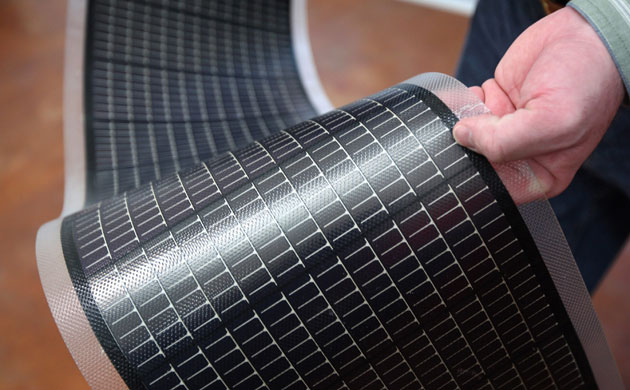
Thin film solar cells
Manufacturing solar cells being thin (thin-film) is cheaper than the production of crystalline silicon. Made from compounds of cadmium, the cells are 75 times thinner, and can absorb the sun better than silicon.
The only disadvantage of this type of cell is that it's not as good at converting sunlight into electricity, compared with crystalline silicon.
Last year, in the laboratory, thin-film technology has reached a record efficiency of 20.4 percent.
Black Silicon

Black silicon solar cells are similar to the cells of crystalline silicon, the difference is that the first is treated so as to be black on the surface.
The black color tends to absorb more sunlight, thus collect more energy, making them an attractive option for areas with little sun (such as the northern regions).
In spite of this, to date, black silicon cell technology has not advanced too much. For this reason, new research, showing an efficiency of 22.1%, it is very promising.

