Biologists at Texas A & M University, along with scientists from the University of Massachusetts, have invented a 3D ultrasound whistle designed to protect bats and other wildlife from the nearby wind farms.
The research is funded by the Michael Smotherman, associate professor in the Department of Biology – and one of the country's leading authorities regarding the study of bat behavior – and funded by the US Energy Department and the Massachusetts Clean Energy Center, writes Wind Power Engineering Development.
"We hope that by developing and improving this technology, we can promote sustainable development of wind energy, while mitigate the significant adverse effects on bat populations in North America," said Smotherman.
In the last decade, between 600,000 and 900,000 bats die annually due to wind turbines, he says.
To prevent bats to fly into the turbines, engineers designing devices that mimic ultrasound. The invention, a pipe constructed using 3D printing technology, is designed in a way that closely resemble the functional anatomy of the larynx bat.
Because the whistles are relatively small, Smotherman says that can be mounted on wind turbine blades, without affecting their viability. In addition, they do not require any power, since it will operate with air pressure generated by the turbine blades. As speed increases propellers, fill impulses become faster and stronger.
"Our intention is to create a warning sound that will alert when approaching bats by turbine blades," said Smotherman to the source.
After the construction of whistles, it will be transported to the lab at Texas A & M University, and undergo tests. Also, scientists will work with the bat to see if the devices are indeed able to deter bats to approach a specific target.
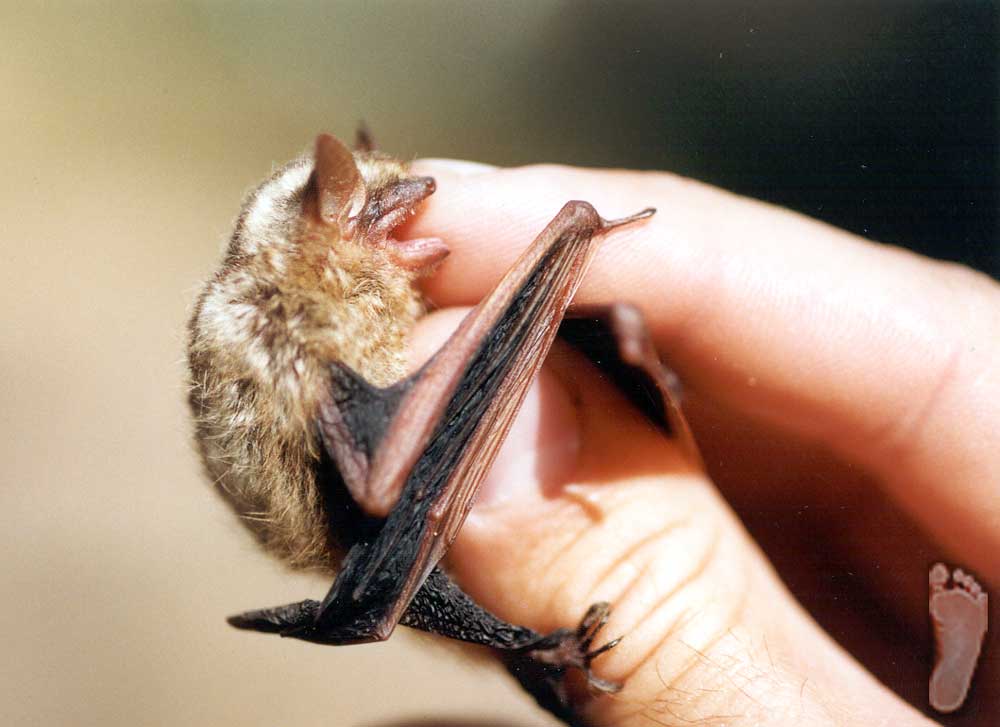
Oamenii de știință au creat un dispozitiv care protejează liliecii de turbinele eoliene. Foto via migrated.ifokus.se
Smotherman anticipated that the whistles testing will begin this fall and will be completed by summer 2016, during which biologists will improve the invention.
"Our concern is that the whistles might accidentally attract them at windmills because sometimes bats sounds for other bats construed as an indication that they found food nearby and will fly there. Therefore, the behavioral tests are critical for deciding whether or not we go ahead with testing whistles on the actual wind turbines. "
If they work, the teacher says that the next step would be to design devices for several species. Because bats species differ in many parts of the world, he warns that they need different devices to optimize depending on the type of the larynx.
"It's important that people know about this project because our studies may have very concrete benefits for society," biologist points out.
"Bats are very vocal animals, and parts of their brain that controls the voice, are much higher compared to other animals."
"We want to learn in the lab, how specific brain circuits interpret and produce sounds of communication. Understanding these functions has important medical purposes for us. "Regarding bats," once you get used to them, you'll notice that not much different from other small animals, "says the researcher.

